
Agile Principles, Mindset, Tools, and Techniques.
(FUSE-SPS- PDU 301)
This 8-PDU course (FUSE-SPS_PDU 301) equips project professionals with the mindset, tools, and frameworks needed to lead and support organizational transformation in today’s agile, fast-changing world. You’ll explore culture, learning, leadership, and agile principles—connecting theory to real-world practice.
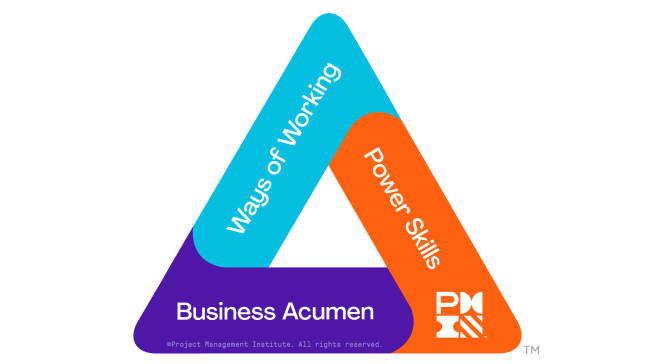
Talent Triangle Breakdown
Business Acumen: 2
Ways of Working: 4
Power Skills: 6
Individal Course Price
USD $199
Bundled Price
USD $100
PDUs
8
Course Duration
8 hours
Associate Certifications
PMP, PMI-ACP, CAPM, PMI-CP
PDU breakdown
This online course provides an opportunity to earn professional development units (PDUs) while building valuable skills.
Total PDUs
14

Business acumen
4.5

Ways of working
4.75

Power skills
4.75

Course Description
In today’s rapidly evolving business landscape, organizations must be agile, resilient, and transformation-ready to remain competitive. This course is designed for PMI-certified project professionals who are looking to deepen their understanding of how to drive and support organizational change through agile practices and adaptive leadership. Participants will earn 8 PDUs toward their PMP® certification renewal upon successful completion.
The course explores the principles of organizational transformation, Agile mindset, value-driven delivery, and stakeholder alignment to help project managers lead effectively in dynamic environments. Through real-world case studies, interactive discussions, and practical applications, participants will develop the skills needed to manage uncertainty, foster team agility, and align transformation efforts with strategic goals.
Learning Objectives
By the end of this course, particpants will be able to:

Understand and Apply Agile Principles
Describe the core values and principles of the Agile Manifesto and explain how they guide project execution in dynamic environments.

Adopt an Agile Mindset
Demonstrate the mindset shift from traditional project management to agile thinking, emphasizing collaboration, adaptability, and continuous improvement.

Implement Agile Frameworks
Apply Scrum and Kanban frameworks effectively by facilitating ceremonies, managing roles and artifacts, and visualizing workflows for optimized team performance.

Use Agile Estimation and Planning Tools
Employ agile estimation techniques such as story points and planning poker, and manage product backlogs and release plans to support iterative delivery.

Lead and Coach Agile Teams
Exhibit servant leadership and coaching capabilities to foster psychological safety, support team autonomy, and guide successful agile transformation efforts.
What You Learn
This course will include knowledge checks at the end of each section/module, featuring multiple-choice questions, matching exercises, and short scenario-based questions to reinforce understanding and assess application of key concepts.

Module 1: Agile Fundamentals and Mindset Transformation
Participants will explore the historical context of agile methodologies, understand the Agile Manifesto’s core values and principles, and learn how to shift from traditional project management thinking to an agile mindset that embraces change, collaboration, and continuous improvement.

Module 2: Scrum Framework and Ceremonies
This module provides in-depth coverage of the Scrum framework, including roles, artifacts, and time-boxed events. Participants will learn to facilitate sprint planning, daily standups, sprint reviews, and retrospectives while understanding how to optimize team performance within the Scrum structure.
Module 3: Kanban and Lean Principles
Participants will discover how to implement Kanban boards for workflow visualization, understand work-in-progress limits, and apply lean principles to eliminate waste and improve process efficiency. This module emphasizes continuous flow and just-in-time delivery approaches.
Module 4: Agile Estimation and Planning Techniques
This module covers various agile estimation methods including story points, planning poker, and relative sizing. Participants will learn to create and maintain product backlogs, conduct release planning, and develop sustainable team velocity for predictable delivery.
Module 5: Agile Leadership and Coaching
Participants will develop servant leadership skills, learn to coach team members through agile adoption challenges, and understand how to create psychological safety and foster self-organizing teams that deliver exceptional results.
Bundle and Save
You can select one of the following packages to addres your 60 PDU needs.
1. Full 60 hour package for $399
2. From 50 -10 hours packages (From $100 -$299)
Related Courses to Select
By the end of this course, particpants will be able to:
Module 1: Foundations of Organizational Transformation and Sustainability
This module introduces the key concepts, drivers, and frameworks of organizational transformation in the context of sustainability and digital disruption. Participants will explore the rationale for change, transformation readiness, and the role of project professionals in enabling future-fit, adaptable organizations.
Module 2: Pillar #1 – Organizational Culture
A strong and adaptive culture is the foundation of any successful transformation. This module explores how values, behaviors, and shared assumptions shape organizational outcomes. Participants will analyze cultural assessment tools and discover how to cultivate a culture that supports innovation, collaboration, and agility.
Module 3: Pillar #2 – Organizational Learning
Organizations that learn continuously evolve effectively. This module delves into the characteristics of learning organizations, knowledge-sharing behaviors, and continuous improvement mechanisms. Participants will assess how feedback loops and reflective practices contribute to long-term transformation.
Module 4: Pillar #3 – Knowledge Management
This module focuses on how to capture, share, and apply knowledge to drive change and resilience. Participants will examine knowledge management systems, tacit vs. explicit knowledge, and tools for ensuring that knowledge flows across teams, functions, and projects.
Module 5: Pillar #4 – Leadership
Transformational change demands agile, inclusive, and visionary leadership. This module explores leadership competencies for navigating complexity, empowering teams, and sustaining momentum. Participants will explore leadership agility, change sponsorship, and how to lead without formal authority.
Module 6: Agile Mindset and Principles
Agility is both a mindset and a method. This module introduces the principles of Agile thinking and delivery, focusing on customer centricity, iterative learning, and value-driven development. Participants will learn how to foster an agile mindset within traditional and hybrid organizations.
Module 7: Putting It All Together – Integrated Transformation Framework
This integrative session connects the four pillars and the agile mindset into a coherent transformation roadmap. Participants will apply frameworks, case studies, and self-assessments to map their organization’s transformation journey and identify strategic intervention points.
Module 8: Trends, Challenges, and Opportunities in Organizational Transformation
In this final module, participants will explore emerging trends—such as digital acceleration, AI, sustainability, and generational shifts—and their impact on transformation efforts. The session includes a forward-looking discussion on leading through uncertainty and leveraging transformation as a competitive advantage.